


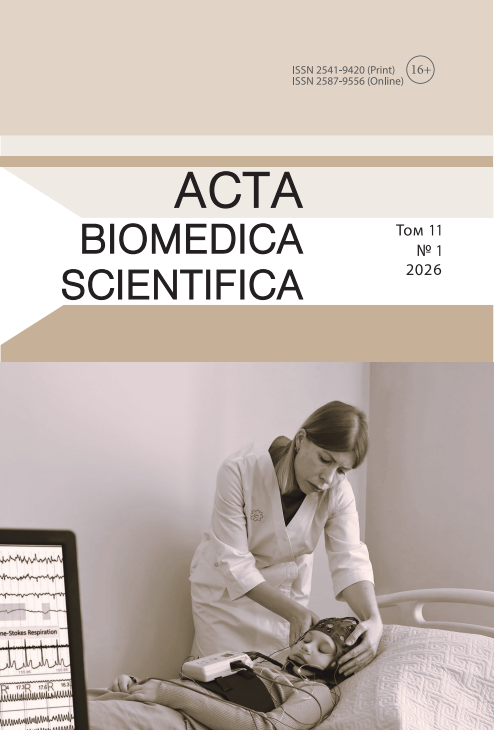
The journal Acta Biomedica Scientifica is a Russian scientific peer-review open access journal, published both in print and electronically. The journal publishes original articles, results of clinical and experimental studies, reviews, lectures, and short communications in the biomedical area of science. It is addressed to specialists, students, post-graduates, researchers and those, whose interests, work, studies lie within biomedical field.
ISSN 2541-9420 (Print)
ISSN 2587-9596 (Online)
Acta Biomedica Scientifica has been issued since 1993. Its former title was Bulletin of the East Siberian Scientific Center SB RAMS (before 2017).
Periodicity: 6 issues per year
Publisher: Scientific Centre for Family Health and Human Reproduction Problems
Address: office 303, Timiryazev str., 16, 664003 Irkutsk, Russia
Phone number: +7 (3952) 20-90-48
e-mail: journalirk@gmail.com
The Editor-in-Chief: Kolesnikov S.I., Academician of the Russian Academy of Sciences
The journal is registered with the Federal Service for Supervision of Communications, Information Technologies and Mass Communications. The mass media registration certificate - PI No. FS77-69383 dated 6 April 2017.
Acta Biomedica Scientifica is included in the abstract journal and database VINITI, RSCI (Russian Science Citation Index, which is Russian bibliographic database). Information about the journal is published in the international reference system for periodical and continuing editions of Ulrich's Periodicals Directory; it is been included in the List of leading peer-reviewed scientific journals, published in the Russian Federation, where the main scientific results of dissertations for completion of Candidate and Doctor of Science are to be published, since 2015.
All articles are assigned with DOI, the journal is indexed in DOAJ.
Current issue
DEPUTY EDITOR IN CHIEF’S PREFACE
INFECTIOUS DISEASES
Background. One of the key factors in triggering the hyperinflammation cascade in patients with bronchial asthma and COVID-19 is the activation of NLRP3 cytosolic complexes and the GSDMD proteins by SARS-CoV-2, which are effector molecules for the lytic and inflammatory forms of pyroptosis.
Aim. To determine prognostic criteria for worsening of mild bronchial asthma following an infectious disease caused by SARS-CoV-2.
Materials and Methods. In patients with mild, partially controlled bronchial asthma (n = 86), who were divided into 2 groups: asthma without COVID-19 (n = 34) and asthma following mild COVID-19 (n = 52), peripheral blood inflammatory markers were evaluated. The patients were examined immediately after recovery and confirmation of a negative SARS-COV-2 test result, and six months post-infection. The control group included conditionally healthy volunteers (n = 15) with no history of COVID-19. Pulmonary function was monitored by measuring FVCL, OFV1, and OFV1/FVCL. NLRP3 and gasdermin D inflammasomes were measured by enzyme-linked immunosorbent assay.
Results. The study revealed that in a number of patients with mild asthma, who had post-COVID conditions 6 months after COVID 19, there were elevated levels of NLRP3 inflammasome and gasdermin D (GSDMD), as well as a decreased pulmonary function, indicating a hyperinflammatory process. A predictive model for worsening of mild asthma after COVID-19 was developed: concurrent elevation of NLRP3 > 0.04 ng/ml and GSDMD > 0.38 ng/ml levels during the convalescence period serves as a marker of a high risk of post-COVID complications.
Conclusion. The role of NLRP3 and GSDMD in exacerbating the course of asthma after COVID-19 has been established, and predictive threshold values of biomarkers in this patient population have been identified.
Background. COVID-19 is associated with systemic inflammation, endothelial dysfunction, and coagulopathy, significantly increasing the risk of thrombotic complications–including acute myocardial infarction (AMI) – including in young patients. The role of the monocyte–macrophage system in the pathogenesis of these complications remains insufficiently studied.
Aim. To investigate the phenotypic composition of peripheral blood monocytes in young patients with COVID-19 alone and in those with concomitant COVID-19 and AMI.
Methods. A comparative cross-sectional study included 223 male patients aged 36.4 (31.2; 41.6) years: 15 with moderate COVID-19 and AMI (main group), 179 with moderate COVID-19 without AMI (comparison group), and 29 healthy individuals (control group). Expression levels of CD14, HLA-DR, CD11b, CD206, CD32, TNFR1, TNFR2, CD68, TRAIL, and TGFβ1 on monocytes were assessed by flow cytometry.
Results. In patients with COVID-19, monocyte expression of CD14 and HLA-DR was significantly reduced compared to controls, while expression of TNFR2, TRAIL, TGFβ1, CD206, CD68, CD32, and CD11b was elevated. These alterations were more pronounced in patients with both COVID-19 and AMI, including increased TNFR1 expression relative to controls. Comparative analysis revealed significantly higher expression levels of TNFR1, TNFR2, TGFβ1, CD206, and TRAIL in the main group versus the comparison group. Significant correlations were found between monocyte marker expression (CD14, HLA-DR, CD206, TNFR1, TNFR2, TRAIL, TGFβ1) and the development of AMI in patients with COVID-19. ROC analysis confirmed the prognostic value of HLA-DR, CD206, TRAIL, and TGFβ1 as markers of high AMI risk in this population.
Conclusion. COVID-19 induces a phenotypic shift in monocytes toward an immunosuppressive, pro-inflammatory, and pro-fibrotic profile, thereby increasing the risk of AMI.
CARDIOLOGY
Background. Coronary artery disease (CAD) is associated with complex molecular changes in adipose tissue (AT) that go beyond simple energy storage. Current studies indicate the active participation of AT in metabolic regulation and secretion of bioactive lipid mediators, including ceramides, the role of which in CAD pathogenesis remains poorly understood, particularly with regard to age and sex differences.
Aim. To characterize the ceramide profile in subcutaneous, epicardial and perivascular AT (SAT, EAT, PVAT) in patients with CAD, with regard to age and sex differences.
Materials and Methods. A lipidomic study of the ceramide profile was conducted in SAT, EAT, PVAT samples obtained from 58 patients with CAD who underwent coronary artery bypass grafting (single-center prospective clinical study). The ceramide composition was analyzed by high-performance liquid chromatography with tandem mass spectrometric detection.
Results. Ageand sex-related differences in the AT ceramide profile were identified. In men, the concentrations of cardionegative ceramides (Cer d18:1/14:0, Cer d18:1/18:0, Cer d18:1/20:0, Cer d18:1/22:0) and Cer d18:1/24:1 were higher (p < 0.05). In PVAT of men, the levels of Cer 14:0, 16:0 and 22:4 were increased (p < 0.001). In EAT and PVAT of women, increased levels of Cer 18:0 and 23:0 were noted (p < 0.05). In EAT and PAT of women, the concentrations of Cer 20:0, 22:0 and 24:1 were higher (p < 0.05). The highest levels of cardionegative ceramides were observed in PVAT of patients aged over 75 years. The ratio of cardionegative to cardioprotective ceramides was higher in EAT in individuals aged 60–74 years and in PVAT in those aged over 75 years.
Conclusion. Significant sexand age-related differences in the AT ceramide profile of patients with CAD were identified, emphasizing the need to consider these factors when assessing cardiovascular risk. The data obtained may contribute to the development of new therapeutic strategies aimed at modulating the ceramide profile of AT to reduce cardiovascular risk.
CLINICAL LABORATORY DIAGNOSIS
Background. Restrictions on the use of gadolinium-containing radiocontrast agents due to the risk of acute and long-term complications drive the search for new, safer, and more effective gadolinium-based nanoparticle formulations.
Aim. Comparative assessment of the magnetocontrast properties of a gadolinium nanocomposite and a gadolinium-based contrast agent.
Methods. The dynamics of organ accumulation and visual MRI patterns were studied in 5 healthy female Wistar rats using a Siemens Avanto device with a magnetic field of 1.5 T. Anesthetized animals were placed in a ventral position within the head coil, after which a preliminary MRI scan was performed. A gadolinium nanocomposite solution and a reference agent (Omniscan®) were injected at equivalent gadolinium doses into the lateral tail vein or into the abdominal cavity, followed by repeat MRI scans with image acquisition every 2–3 minutes. The primary imaging areas were the abdominal cavity and retroperitoneal space, including the thoracic cavity.
Results. Comparative analysis showed that gadolinium nanoparticles stabilized with arabinogalactan exhibit magnetocontrast properties, as evidenced by T1-weighted image enhancement of the liver parenchyma after intravenous administration and of the abdominal cavity after intraperitoneal administration. The magnetocontrast image of the kidneys and bladder was higher after Omniscan® administration than after gadolinium nanocomposite administration. However, the maximum contrast coefficient of the gadolinium nanocomposite in the liver parenchyma increased by 20 % compared to baseline. Omniscan® administration resulted in a 13 % increase in T1-weighted image intensity of the liver parenchyma.
MICROBIOLOGY AND VIRUSOLOGY
Background. Avian paramyxoviruses (subfamily Avulavirinae) are widespread avian pathogens that constantly circulate in wild and domestic animal populations. The subfamily Avulavirinae is divided into 3 genera, comprising 22 species. Epizootic surveillance of avulaviruses is conducted worldwide and is of critical importance due to their rapid spread via bird migrations. Avian viruses can cause significant economic damage to the poultry industry both in developing countries and in regions with sustainable economic development. Their infectious potential is of great interest and remains poorly understood.
The majority of intercontinental flyways of migratory birds pass through the territory of continental Eurasia, where large numbers of migratory birds congregate in confined areas during stopovers, nesting and wintering. This creates favorable conditions for virus transmission and the emergence of new genetic variants.
Aim. To analyze the species distribution of paramyxoviruses in wild birds across continental Eurasia.
Materials and Methods. As a result of long-term studies of viruses in wild bird populations across continental Eurasia, avian avulavirus isolates were obtained.
Results. Avian avulavirus isolates of APMV -1, -3, -4, -6, -8, -9, -11, -12, -13, -16, -20, and -21 were obtained. APMV-1 and APMV-4 were detected throughout Eurasia, most frequently in Anseriformes. APMV-3, -6, -9, -11, and -12 were recorded in the European part of Eurasia, APMV-8, -13, and -20 in its central part, and APMV-6, -16, and -21 in the Asian part, in Anseriformes, Passeriformes, Charadriiformes, Ciconiiformes, and Psittaciformes.
MORPHOLOGY, PHYSIOLOGY AND PATHOPHYSIOLOGY
Background. The accurate determination of human coronary artery (HCA) diameters plays a pivotal role in the diagnosis, risk assessment, and treatment planning of ischemic heart disease. Given that vascular networks possess a fractal structure and consist of arterial bifurcations (AB), a critical task is the prediction of the diameters of daughter (distal) arterial segments (AS) based on the known diameter of the mother (proximal) AS. Existing numerical modeling methods (ENMM) for predicting arterial diameters rely on approximate analytical dependencies derived empirically.
Aim. To conduct a comparative analysis of the results of predicting diameters of daughter segments (bifurcation components) obtained using Graph Neural Networks and known numerical modeling methods based on morphometric data of real healthy human coronary arteries.
Methods. To achieve this objective, various GNN architectures were implemented and tested: GCN, GraphSAGE, GAT, and TransformerConv. Additionally, ENMM and a Multilayer Perceptron (MLP) were evaluated. A comparative statistical analysis of the results was conducted. The study utilized previously obtained morphometric data on the internal diameters of AS comprising 30 corrosion cast graphs of healthy HCAs. Results. This study proposes the use of GNNs for this specific task for the first time. Comparative analysis demonstrated that all GNN models surpassed both ENMM and the Multilayer Perceptron in accuracy when predicting the diameters of smaller-caliber daughter AS. The TransformerConv architecture demonstrated the best performance, achieving a coefficient of determination R2 = 0.96 and RMSE = 0.199 for predicting the larger daughter segment diameter, and R2 = 0.76 and RMSE = 0.221 for the smaller segment.
Conclusion. The developed models may serve as the foundation for creating clinical decision support systems, enabling more precise assessments of the structural status of human coronary arteries.
The method of laser doppler flowmetry is one of the relevant and informative ways to study the state of the microcirculation.
The aim of the work was to conduct a comparative analysis of the microcirculatory system of boys and girls according to laser Doppler flowmetry (LDF).
Materials and methods. The study involved 128 second-year students of the Medical Institute of the North-Eastern Federal University named after M.K. Ammosov. All individuals were of Yakut nationality. The boys’ group consisted of 44 people, the girls’ group consisted of 84 people. The state of microcirculation and the functioning of its regulatory mechanisms were assessed by laser Doppler flowmetry (LDF) using two identical single-channel portable LASMA PF analyzers (OOO NPP LAZMA, Moscow). The measurement was carried out on the lower third of the right and left forearms for 5 minutes.
Results. Significant intergroup differences in microcirculatory parameters between the examined boys and girls were established. The results showed significant sex differences in the state of the microcirculatory system: the boys recorded higher values of shunt blood flow (1.71 ± 0.13) and a large amplitude of fluctuations due to vascular endothelial activity (0.04 ± 0.01). The girls had significantly lower shunt blood flow (1.34 ± 0.07) and endothelial activity (0.01 ± 0.01). At the same time, the levels of nutritional blood flow, as well as the activity of neurogenic and myogenic regulatory mechanisms, were similar in both sexes. A group of people with a low level of respiratory fluctuations in blood flow prevailed among the subjects (68.2 % of boys and 73.8 % of girls). And the indicators of cardiac fluctuations in blood flow were at a normal or reduced level and also did not depend on gender.
Conclusion. The study highlights the need to take into account the age and gender characteristics of the microcirculatory system in the diagnosis and monitoring of diseases of the cardiovascular system, especially in young people living in the extreme climatic conditions of Yakutia.
NEUROLOGY AND NEUROSURGERY
Background. Maintaining cognitive health and preventing dementia are priorities in modern medicine and science. Nootropics play an important role in neuroprotection. Multicomponent herbal remedies containing medicinal plant extracts hold promise as phytopharmacological regulatory systems for maintaining and restoring cognitive health.
Aim. To analyze the psychophysiological characteristics of cognitive functions in middle-aged and older adults and to assess the effect of a phytoconstituent with nootropic properties on these characteristics.
Materials and methods. Before and after a course of treatment with the phytoconstituent, participants underwent a comprehensive examination that included electrocardiography with heart rate variability assessment; evaluation of short-term and longterm memory using the “10-Word Memorization” test by A.R. Luria; and assessment of logical thinking using the “Complex Analogies” test.
Results. The study identified two groups of participants: those with moderate and those with high levels of working memory and logical thinking. Group 1 was characterized by low parasympathetic nervous system markers and reduced heart rate variability. Group 2 demonstrated higher heart rate variability and elevated parasympathetic markers. After administration of the phytoconstituent, parasympathetic activity markers (RMSSD, HFmc2, HF%) increased in Cluster 1 and decreased in Cluster 2. Following the course of the phytoconstituent, Group 1 exhibited a more pronounced improvement in memory indices and logical reasoning abilities.
Conclusion. An association was found between high levels of working memory and logical thinking and a predominance of parasympathetic influences on heart rhythm. Administration of the herbal preparation with nootropic properties resulted in improved cognitive function and a balanced autonomic nervous system.
Restless legs syndrome (RLS) is a common sensorimotor neurological disorder that significantly disrupts sleep and is associated with an increased risk of chronic noncommunicable diseases. RLS is considered a common movement disorder, occurring approximately 50 % more frequently in women and in individuals of European descent. The etiology of the disease remains unknown. The pathophysiology of RLS is also not fully understood. Dopaminergic dysfunction is a key feature of RLS. Since its discovery, the role of iron deficiency has been emphasized, not iron levels in the peripheral blood, but rather its concentration in the central nervous system. The hyperdopaminergic state in RLS can lead to decreased endogenous opioid levels, which may contribute to impaired sensory processing. Overexpression of the estrogen signaling pathway has been confirmed in patients with RLS. RLS is characterized by an uncontrollable and distressing urge to move the legs and other body parts, often accompanied by unpleasant and irritating sensations. Symptoms often appear or worsen in the evening and at night and are relieved by voluntary movement. Currently, the diagnosis of RLS is based on the clinical picture, and therefore criteria have been developed for a more objective diagnosis. Non-pharmacological treatments include sleep hygiene, moderate-intensity exercise, yoga, leg massage, progressive compression devices for the lower extremity muscles, and avoiding factors that aggravate RLS. The development of new medications for the treatment of RLS has been somewhat delayed due to a limited understanding of its pathophysiology. Dopaminergic agonists, α2δ calcium channel ligands, and opioids are used in the treatment of RLS. The disorder is under-recognized by physicians and often remains undiagnosed. RLS is a treatable disease, but the risk of augmentation during drug therapy makes it necessary to develop effective non-drug treatment methods.
ONCOLOGY
Background. The paper describes a method of low intensity photodynamic therapy (LIPDT) for the treatment of superficial basal cell skin cancer (SBCSC) stage I using topical application of the photosensitizer Photoditazine gel® or intravenous Photoditazine® solution. LIPDT is the treatment of choice in medical organizations lacking laser equipment, specialized facilities, or for remote use (in distant areas). It can also be used as an adjunct to other treatment methods.
Aim. To provide a theoretical rationale for the use of a LIPDT device with Photoditazine® and Photoditazine gel® for the treatment of SBCSC.
Materials and methods. The developed device consists of the following elements: a battery, a control board, a DC-DC voltage converter, a microcontroller, a driver, and an LED matrix. The mechanism of the device is based on the classical PDT method but has several key differences: automatic mode (eliminating the need for manual adjustment), low output radiation power (which prevents oxygen depletion in tumor tissue), and the ability to function under conditions unsuitable for standard PDT.
Conclusion. The proposed LIPDT method for treating stage I SBCSC will reduce treatment costs while maintaining the effectiveness of the existing standard PDT method.
PEDIATRICS
Background. Maturation of the intestinal epithelial barrier in early life is accompanied by variability in biomarkers of enterocyte injury and permeability. However, longitudinal serum profiles of I-FABP and claudin-2 in seemingly healthy children, including those born preterm, remain insufficiently studied.
Aim. To assess the dynamics of serum I-FABP and claudin-2 concentrations in children born at 34–41 weeks’ gestation during the first 24 months of life, with consideration of gestational age.
Methods. This prospective observational cohort study included three time points: up to 7 days; 1–1.5 months/postmenstrual age (PMA) 40–41 weeks; and 18–24 months. At time points 1–2, 98 newborns were enrolled; by time point 3, follow-up was completed in 88 children: preterm (34–36 weeks, n = 30) and term (37–41 weeks, n = 58). Loss to follow-up was 10.2 % (n = 10). I-FABP and claudin-2 were measured by ELISA.
Results. I-FABP remained stable during the first 1–1.5 months and increased by the second year of life: in preterm children 1.12 [1.07; 1.30] – 1.30 [0.97; 1.87] – 6.09 [3.18; 6.65] ng/mL (p < 0.001), and in term children 1.10 [0.80; 1.95] – 1.21 [0.92; 1.73] – 3.89 [2.33; 6.10] ng/mL (p < 0.001); no between-group differences were observed at the respective time points (p = 0.738; 0.610; 0.131). In preterm children, claudin-2 did not change significantly: 6.76 [3.00; 9.14] – 7.59 [5.20; 10.96] – 7.77 [6.33; 9.20] ng/mL (p = 0.497).
In term children, claudin-2 increased: 1.85 [1.02; 5.22] – 5.10 [3.47; 8.31] – 7.95 [6.32; 11.28] ng/mL (p < 0.001). At time points 1–2, claudin-2 values were higher in preterm than in term children (p = 0.006; p = 0.009), whereas at time point 3 they were comparable (p = 0.326).
Conclusions. Within the 34–41-week gestational range, gestational age does not determine I-FABP levels, whereas claudin-2 is gestational age-dependent. Interpretation of these biomarkers requires consideration of both chronological age and gestational age.
Background. The prevalence of chronic tonsil diseases is constantly increasing among children of different ages. To date, the treatment of pediatric patients with chronic diseases of the upper respiratory tract remains controversial and requires new therapeutic approaches.
Aim. To study the clinical and anamnestic characteristics of chronic adenoiditis in children aged 3-6 years and to evaluate the effectiveness of including a probiotic drug in postoperative rehabilitation.
Methods. A total of 100 children aged 3–6 years with chronic inflammatory processes of the nasopharynx were examined. The patients were divided into 2 comparable groups, depending on the treatment and rehabilitation measures received. A parent survey was conducted to assess the severity of clinical symptoms before treatment and 30 days after adenotomy.
Results. The frequency and duration of viral infections in children with chronic adenoiditis were assessed. Before surgery, 62 % of children had acute respiratory infections (ARIs) once every 2 months or more, and 62 % had ARI episodes lasting more than 7 days. According to the survey results, after treatment there was a statistically significant decrease in the frequency of the following symptoms in children in both study groups: difficulty in nasal breathing, snoring, cough, and bad breath. In the main group, there was a marked decrease in the intensity of nasal breathing difficulty (by 84 %) and in the frequency of sleep disorders (by 58 %) after probiotic treatment.
Conclusion. The post-treatment survey data demonstrate regression of clinical symptoms in both groups. However, with respect to symptoms such as decreased intensity of nasal breathing and reduced frequency of sleep disorders, higher therapeutic efficacy was observed when a probiotic was used as an adjunct to adenotomy.
Introduction. Hypofibrinogenemia is a rare coagulation disorder characterized by reduced plasma fibrinogen levels and an increased risk of hemorrhagic complications. Inherited forms, caused by mutations in the FGA, FGB, or FGG genes, have an estimated prevalence of 1:500,000 and often remain undiagnosed due to an asymptomatic course.
Aim. To present a rare clinical case of hereditary hypofibrinogenemia with a paucisymptomatic course in a child, in order to address challenges in diagnosis, long-term follow-up, and determining indications for prophylactic therapy to prevent hemorrhagic complications.
Materials and Methods. We report a clinical case of hereditary hypofibrinogenemia in an 8-year-old child. The diagnosis was suspected incidentally during a routine pediatric examination. The diagnosis was subsequently confirmed by a hematologist based on persistently low fibrinogen levels, a positive family history (maternal hereditary hypofibrinogenemia), and genetic testing. Differential diagnosis with acquired forms of hypofibrinogenemia was performed based on clinical and laboratory evaluation, including complete blood count, coagulogram, aggregatogram, biochemical parameters, and instrumental studies.
Results. The key feature of this case was the mild clinical presentation, which included a neonatal cephalohematoma, a single episode of blood in stool, and rare epistaxis. This aligns with literature data on the highly variable phenotypic expressivity of hypofibrinogenemia. The importance of a detailed family history and genetic testing in diagnosing inherited coagulopathies, even in the absence of overt bleeding, is emphasized.
Conclusion. This case highlights the need for physician vigilance regarding inherited coagulation disorders in patients with abnormal coagulation test results, even in the absence of significant clinical symptoms. The development and implementation of strategies for long-term patient monitoring and the prevention of potential hemostasis-related risks are of paramount importance.
Background. Hereditary Tyrosinemia Type 1 (HT1) is an orphan disease belonging to the group of amino acid metabolism disorders, with an autosomal recessive pattern of inheritance. It is caused by a mutation in the FAH gene, which encodes the enzyme fumarylacetoacetate hydrolase. The clinical presentation is polymorphic. Diagnosis is based on the detection of specific metabolites in biological samples and molecular genetic testing. Early diagnosis determines the effectiveness of therapy and the prognosis of the disease.
Clinical case description. We present a clinical case of early detection of HT1 in a female newborn through expanded neonatal screening. The clinical picture was characterized by hepatomegaly, coagulopathy, and specific biomarkers, including elevated levels of succinylacetone in the blood. This finding served as the basis for immediate initiation of nitisinone therapy and an individually calculated low protein diet supplemented with a specialized amino acid mixture. Molecular genetic testing confirmed the diagnosis: a previously described pathogenic nucleotide sequence variant, chr15:80181069G>C in the FAH gene in a homo/hemizygous state, was identified. This variant leads to a missense substitution c.1090G>C, p.(Glu364Gln). During the follow up period, the patient has shown a favorable course of the disease.
Conclusion. Early diagnosis of HT1 based on specific succinylacetone screening and timely initiation of pathogenetic therapy combined with dietary management ensure a favorable prognosis for the disease.
PREVENTIVE MEDICINE
Men over the age of 45 are a socially significant group, most of whom have reached professional maturity and make a significant contribution to the country’s economy and their families. In the Arkhangelsk Region, the health status of 40–45-year-old men (57 %) is characterized by cardiovascular pathology, 14.7 % – by gastrointestinal pathology, 47.4 % – by bronchopulmonary pathology, and 17.0 % – by musculoskeletal disorders. Male specialists from the Hydrographic Service in Arkhangelsk carry out planned and special hydrographic works during the navigation period on a rotational basis, making short-term frequent trips of 16 days in the Northern Seas.
The aim. To analyze the features of leukocyte content and phagocytosis in hydrographers of the Arkhangelsk region of the Hydrographic Service of the Russian Federation, taking into account their age and work experience in the northern seas.
Materials and methods. Thirty-six men working in the hydrographic service of the Federation Council of the Russian Federation were examined with short 16-day shifts: 15 men aged 30–40 with 10 years of work experience and 21 men aged 50–65 with 20 years of work experience. The leukocytes count and phagocytosis in peripheral venous blood were determined, taking into account age and work experience. For statistical processing, Microsoft Excel 2010 and SPSS 20.0 for Windows were used as software packages.
Results. It has been established that hydrographers of the younger age group with 10 years of work experience have a 1.5–2 times higher incidence of leukocyte, lymphocyte, and monocyte deficiency, which is associated with low phagocytosis activity. In the older age group of individuals with 20 years of work experience, leukocytosis, lymphocytosis, and monocytosis are recorded 1.5 times more frequently against the background of increased phagocytosis activity.
Conclusion. The phagocytic activity of neutrophils is higher in the older age group with 20 years of experience in extreme conditions.
PHARMACOLOGY AND PHARMACEUTICS
Background. Currently, the main groups of anti-inflammatory drugs used in medical practice are steroidal (glucocorticoids) and non-steroidal agents. However, despite their widespread use, these groups of anti-inflammatory drugs have a fairly wide range of negative side effects, which makes the search for low-toxic substances with anti-inflammatory effects currently relevant.
The aim. To study anti-inflammatory, antinociceptive activity and acute toxicity of individual representatives of indenopyrroles and indenopyridazines.
Methods. The acute toxicity of the studied compounds was studied using the method of Prozorovsky VB. Anti-inflammatory activity was assessed in a carrageenan-induced rat paw edema model. The production of active oxygen radicals by leukocytes was evaluated using luminol-dependent chemiluminescence. The antinociceptive activity of the compounds was assessed using the “writhing” and “hot plate” tests in mice.
Results. The obtained results allowed the studied compounds to be classified as “practically nontoxic” (LD50 > 1000 mg/kg). Compounds 1в of the indenopyrrole series and indenopyridazines 2а-в were found to exhibit anti-inflammatory activity, reducing the severity of exudative inflammation. Compound 2a exhibited the greatest antiexudative activity, reducing edema by more than 60 % (p < 0.01). Compounds 2a-в and compound 1в reduced the production of reactive oxygen species by more than 40 % (p < 0.05) compared to the control. In the “hot plate” test, the studied compounds 1a, 1в, 2a-в exhibited an antinociceptive effect comparable to nimesulide; in the “acetic acid-induced writhing” test, the effect of compounds 1a, 2б, 2в was comparable to nimesulide, and the effect of compound 2a exceeded the comparison drug by 32.96 % (p < 0.05).
Conclusion. The studied compounds of the indenopyrrole series and their indenopyridazine derivatives are virtually non-toxic compounds, exhibit an anti-inflammatory effect and reduce the severity of pain associated with inflammation.
SURGERY
Backgorund. Numerous surgical techniques have been proposed for the treatment of patients with persistent elbow contractures that cause significant functional impairment. However, the treatment results are not always satisfactory for surgeons and patients due to the invasive nature of the procedure and the risk of contracture recurrence. Aim. To demonstrate the feasibility of using hydraulic mobilization for the management of the soft tissue component of contracture to improve elbow function.
Methods. During the first stage of surgical treatment, hydraulic mobilization of the elbow joint and collateral ligaments was performed to increase the angle of extension. Saline solution was used to dilate the joint cavity, stretch the capsule, and release any scarring from the ligaments. Tunneling of the proximal metadiaphysis of the ulna and distal metadiaphysis of the humerus was also performed to improve blood flow to the bone and reduce intraosseous pressure. At the second stage of treatment (6 months after the first stage of surgery), arthrotomy of the left elbow joint, osteotomy of the malunited fragment of the humeral capitellum, its resection, and plaster immobilization of the left upper limb were performed.
Results. After the first stage of treatment, the elbow extension angle was increased to full extension. After the second stage, elbow flexion function improved. The patient’s quality of life improved, and they are now able to use their arm fully. No significant pain was reported.
Conclusions. In this case, the presented treatment strategy is justified and optimal, as it adheres to the principles of gentle tissue handling during surgery, early initiation of active motion, and avoidance of passive redressing manipulations that cause pain and microtrauma to the elbow joint and accelerate mesenchymal tissue maturation. Hydraulic mobilization requires no additional surgical approaches or special equipment, causes virtually no trauma to surrounding tissues, reduces surgical time, and eliminates the risks of open surgical techniques.
EXPERIMENTAL RESEARCHES
Background. Ischemic stroke (IS) remains one of the leading causes of death and disability worldwide. Due to the limitations of oral and parenteral routes of neuroprotectant administration in post-stroke patients, the use of rectal suppositories with melatonin (MT) is a promising direction for neuroprotective therapy.
Aim. To evaluate the effect of rectal suppositories containing MT on the dynamics of neurological status and products of oxidative protein modification in experimental acute cerebral ischemia (EACI).
Materials and methods. Male Wistar rats (n = 30) were divided into 3 groups: I – sham-operated animals; II – animals with EACI according to the method of Chen S.T. et al.; III – animals with EACI that received rectal suppositories weighing 100 mg, containing 2.5 mg of MT. Neurological status was assessed on days 3 and 7 using the Garcia J.N. scale, the paw placement test, and the Bederson test. In the ischemic focus of the brain (IFB), the content of early and late products of protein oxidative modification (POM) was evaluated.
Results. In rats with EACI, neurological deficits developed on the corresponding day (decreased scores on the Garcia J.N. scale and the paw placement test, increased scores on the Bederson test) and an increase in the content of POM products in the IFB. Administration of MT suppositories contributed to the regression of these disorders: by day 7, there was an improvement in all neurological tests, and a decrease in POM products in the IFB.
Conclusions. The results obtained suggest that the neuroprotective effect of MT in the form of rectal suppositories in EACI is mediated through an antioxidant mechanism of action.
Background. Despite the increasing prevalence of emotional overeating and obesity, the specific neurohormonal mechanisms involved in the pathogenesis of these pathological processes remain poorly understood. The incretin system may serve as an important therapeutic target for the correction of these eating disorders.
Aim. To study the effects of the dual GIP/GLP-1 receptor agonist tirzepatide on feeding behavior parameters in a rat model of emotional overeating induced by intracranial self-stimulation (ICSS).
Methods. Experiments were performed on male Wistar rats with electrodes implanted in the ventral tegmental area. Tirzepatide was administered subcutaneously at doses of 0.05, 0.10, and 0.30 mg/kg for 7 days. Food intake (number of seeds consumed) was assessed at 1 minute, 30 minutes, and on days 3 and 7 after administration.
Results. No statistically significant changes in feeding activity were observed 30 minutes after tirzepatide administration. On the third day, a decrease in food intake was observed only at the maximum dose (0.30 mg/kg). On the seventh day, a significant anorexigenic effect was observed at doses of 0.10 and 0.30 mg/kg, indicating a doseand time-dependent effect.
Conclusion. Tirzepatide does not exert a significant acute effect on feeding activity in the emotional overeating model at 30 minutes after administration. Repeated administration of the drug revealed a doseand time-dependent anorexigenic effect, manifested by a decrease in food intake on days 3 and 7 of the experiment. The most pronounced decrease in feeding activity was observed at doses of 0.10 and 0.30 mg/kg on day 7.
Background. The increase in the number of cases of generalized tuberculosis infection with intestinal damage, especially in HIV-positive patients, underscores the need for further study of this problem. Tuberculosis is transmitted by airborne droplets; however, there are known cases of intestinal tuberculosis in which infection occurred through the alimentary route. Since such cases are extremely rare, there are likely specific immunological and epidemiological conditions that allow Mycobacterium tuberculosis to penetrate the intestinal wall and develop primary inflammation.
The aim. To study the possibility of an alimentary route of tuberculosis infection in immunocompetent and immunocompromised individuals using a reproducible rabbit model.
Materials and Methods. The experiment involved rabbits, divided into three groups. Animals were orally administered a suspension of a standard laboratory isolate Mycobacterium tuberculosis H37Rv. The first group included immunocompetent rabbits immunosuppressed with infliximab, the second group had animals reinfected against the background of immunodeficiency, and the third group included rabbits with a combination of drug-induced immunosuppression and chemically induced enterocolitis. To assess the results of infection, clinical observation, detection of MTB DNA in feces, skin test with ATR, pathoanatomical, histological and molecular genetic examination of organs were used.
Results. Despite the temporary shedding of MTB DNA in feces (60–70 %), no signs of tuberculous inflammation in the organs were present in animals in groups 1 and 2. In group 3, macroand microscopic signs of tuberculosis were detected in the lungs of 83.3 % of the animals and in the mesenteric/intrathoracic lymph nodes of 58.3 %. At the same time, no specific granulomatous intestinal lesions were found in any of the groups.
Conclusion. The development of tuberculous enterocolitis in rabbits following oral infection is unlikely. The alimentary route of infection can lead to generalized tuberculosis only when two key predisposing factors are present: systemic immunosuppression and previous damage to the intestinal barrier.
Background. In more than 30 % of cases, infertility is attributed to male factors. The diagnosis of male infertility is based on semen analysis. The assessed semen parameters include sperm concentration, motility, and morphology. Laboratory animal models enable the study of various biological processes, including the effects of external and internal factors on reproduction processes. However, to date, there is no simple, safe, non-terminal method for sperm collection in animals.
Aim. To develop a non-terminal sperm collection technique using optimal electrical stimulation parameters in Wistar rats to study the influence of environmental factors on the reproductive function.
Materials and methods. The study was performed on 30 male Wistar rats weighing 280–300 g. For sperm collection, a rectal electrical stimulator was used to obtain ejaculate. A hemocytometer and two types of microscopes were used for sperm analysis and counting: a Micromed P-1 LED (Russia) and a Levenhuk D90L LCD digital microscope (China).
Results. All animals were divided into 6 groups of five individuals each, according to the electrical stimulation protocol. All stimulation protocols resulted in erection in all groups of animals. However, the safest and most cell-saving method was found to be rectal electrical stimulation of the seminal colliculus of rats at settings of 60 Hz and 4 V.
Conclusion. A method for sperm collection in Wistar rats with an optimized electrical stimulation protocol has been developed, enabling the study of various factors affecting male fertility.
Background. Ongoing research is investigating the interaction between mycobacteria and macrophages. Upon infection with mycobacteria, macrophages release cytokines. These include IFNy, TNF, IL-1, IL-6, and IL-12p40, among others. These substances play a critical role in the host response to tuberculosis and other mycobacterial infections. Aim. To investigate and compare the cytokine patterns produced by human macrophages in response to interaction with antigens from both pathogenic and conditionally pathogenic mycobacterial strains in vitro.
Methods. Blood monocytes were cultured for five days in the presence of 10 % active human serum. The resulting macrophages were then cultured with mycobacterial antigens from Mycobacterium tuberculosis, Mycobacterium avium, and Mycobacterium kansasii for 24 hours. Changes in macrophage gene expression profiles and the production of pro-inflammatory and anti-inflammatory cytokines were then assessed. A control group of “naive” macrophages cultured without any mycobacterial antigen was also used.
Results. Stimulation of human macrophages with antigens from different mycobacterial species resulted in the formation of distinct cell phenotypes: protective (M. tuberculosis), characterized by the expression of IL6, IFNG, and TNF; pro-inflammatory (M. kansasii), with active expression of IL6, IL1B, and TNF; and pro-inflammatory (M. avium), expressing IL6 and IL12. The cytokine production findings were fully consistent with the gene expression data.
Conclusion. These findings on macrophage-mycobacterial antigen interactions provide insight into the mechanisms by which both tuberculous and nontuberculous mycobacterial infections establish chronic macrophage infection.
ECONOMICS AND HEALTHCARE MANAGEMENT
Background. The challenges of organizing tuberculosis detection in sparsely populated areas are primarily associated with poor transportation access and a shortage of medical personnel. Under these conditions, the implementation of modern information technologies in clinical and radiological screening for the disease becomes highly relevant.
Aim. To optimize methods for the detection and diagnosis of pulmonary tuberculosis using information technologies in the sparsely populated territory of the Republic of Sakha (Yakutia).
Methods. A pilot study was conducted in seven medical organizations of the Republic of Sakha (Yakutia) to test a two-component organizational model for clinical and radiological tuberculosis screening utilizing information technologies: a central medical image archive and telemedicine for remote diagnosis, as well as artificial intelligence for double reading of fluorograms. Effectiveness was assessed by monthly monitoring of population coverage with fluorographic examinations, measuring the time spent on double reading of fluorograms, and assessing the time to tuberculosis diagnosis.
Results. The pilot implementation of the two-component organizational model for clinical and radiological tuberculosis screening, employing information technologies and artificial intelligence in medical organizations, led to increased fluorographic examination coverage of the general population and individuals at risk for tuberculosis. This implementation also reduced the time required for double reading of fluorograms and shortened tuberculosis diagnostic timelines, both in the general medical network and at the specialized tuberculosis service level. Considering the specific characteristics of tuberculosis detection organization across different socio-territorial zones of the Far North, a model for clinical and radiological screening of pulmonary tuberculosis was developed. This model comprises two organizational variants tailored for use in the Arctic and industrial zones. The model consists of three stages (radiological, clinical, and specialized) implemented at the level of the central district hospital departments.
Conclusion. The proposed model for tuberculosis screening using information technologies is recommended for implementation in sparsely populated districts of the Far North.
EPIDEMIOLOGY
Background. The COVID-19 pandemic and the associated non-pharmaceutical interventions (NPIs) significantly altered the global epidemiology of various infectious diseases. Studying the dynamics of hospitalizations for acute intestinal infections in a specific region during different periods of the pandemic allows for assessment of the effect of these measures and identification of patterns in the recovery of the epidemic process. Aim. To evaluate the impact of the COVID-19 pandemic on the dynamics and structure of hospitalizations of children with acute intestinal infections (AII), including rotavirus infection (RVI), in Chita over the period 2014–2023.
Materials and Methods. A retrospective analysis of statistical reporting data from the Regional Clinical Infectious Diseases Hospital in Chita was conducted. A total of 11,520 hospitalization cases of children aged 0–17 years with AII over a 10-year period were analyzed. Descriptive and non-parametric statistical methods were used, including time series analysis, the χ2 test, the φ-coefficient, and Spearman’s correlation analysis. Data processing was performed using IBM SPSS Statistics 26.
Results. During the peak pandemic period (2020–2021), the number of hospitalizations for AII decreased 1.6-fold (χ2 = 9.680; p = 0.002), and for RVI – 1.4-fold (χ2 = 23.955; p < 0.001) compared to the pre-pandemic period. The etiological structure of AII did not change significantly: the proportion of RVI among all cases was 24.48 % (pre-pandemic), 23.68 % (peak pandemic), and 22.87 % (post-pandemic) (p > 0.05). A strong positive correlation was found between the total number of AII hospitalizations and RVI cases (r = 0.789; p = 0.008). In the post-restriction period (2022–2023), an increase in hospitalizations was observed.
Conclusions. The anti-epidemic measures during the COVID-19 pandemic led to a significant reduction in hospitalizations for AII and RVI without affecting their etiological structure. The subsequent increase in incidence following the lifting of restrictions confirms the restoration of the epidemic process, which underscores the need for ongoing epidemiological surveillance and the expansion of vaccination programs.
HISTORY OF MEDICINE AND ANNIVERSARIES
Announcements
2025-12-30
Уважаемые авторы!
Уведомляем о повышении стоимости публикации статьи в журнале Acta Biomedica Scientifica до 25 000 рублей для авторов, регистрирующихся на сайте с 1 января 2026 года. Надеемся на понимание и ждем Ваши новые интересные работы!
| More Announcements... |

ISSN 2587-9596 (Online)


.png)



